
Have you ever stared at a dusty jar of old coins, wondering if one might make you rich? If you’re like most folks, you’ve got a stash of spare change tucked away—maybe from your grandma’s attic or just years of pocket lint. But what if I told you that rare dimes and Bicentennial quarters could be worth a fortune? We’re talking a whopping $350 million in total potential value across the U.S., hidden in plain sight. That’s right—everyday coins from your wallet could turn into a life-changing windfall.
In this guide, we’ll break it all down in simple terms. No fancy jargon, just straightforward tips to spot these gems. Whether you’re a coin newbie or a casual collector, you’ll learn how to check your coins like a pro. Stick around, because by the end, you might just dash to your piggy bank. Let’s dive into the world of valuable coins that could make headlines—and pad your bank account.
Why Rare Dimes Are the Hidden Jackpots of Coin Collecting

Dimes might seem tiny and forgettable, but some rare dimes are absolute goldmines. These silver shiners from the early 1900s pack stories of history, mistakes at the mint, and pure luck. Collectors go wild for them because they’re scarce—like finding a four-leaf clover in a field of grass.
The Magic of Mercury Dimes: A Blast from the Past
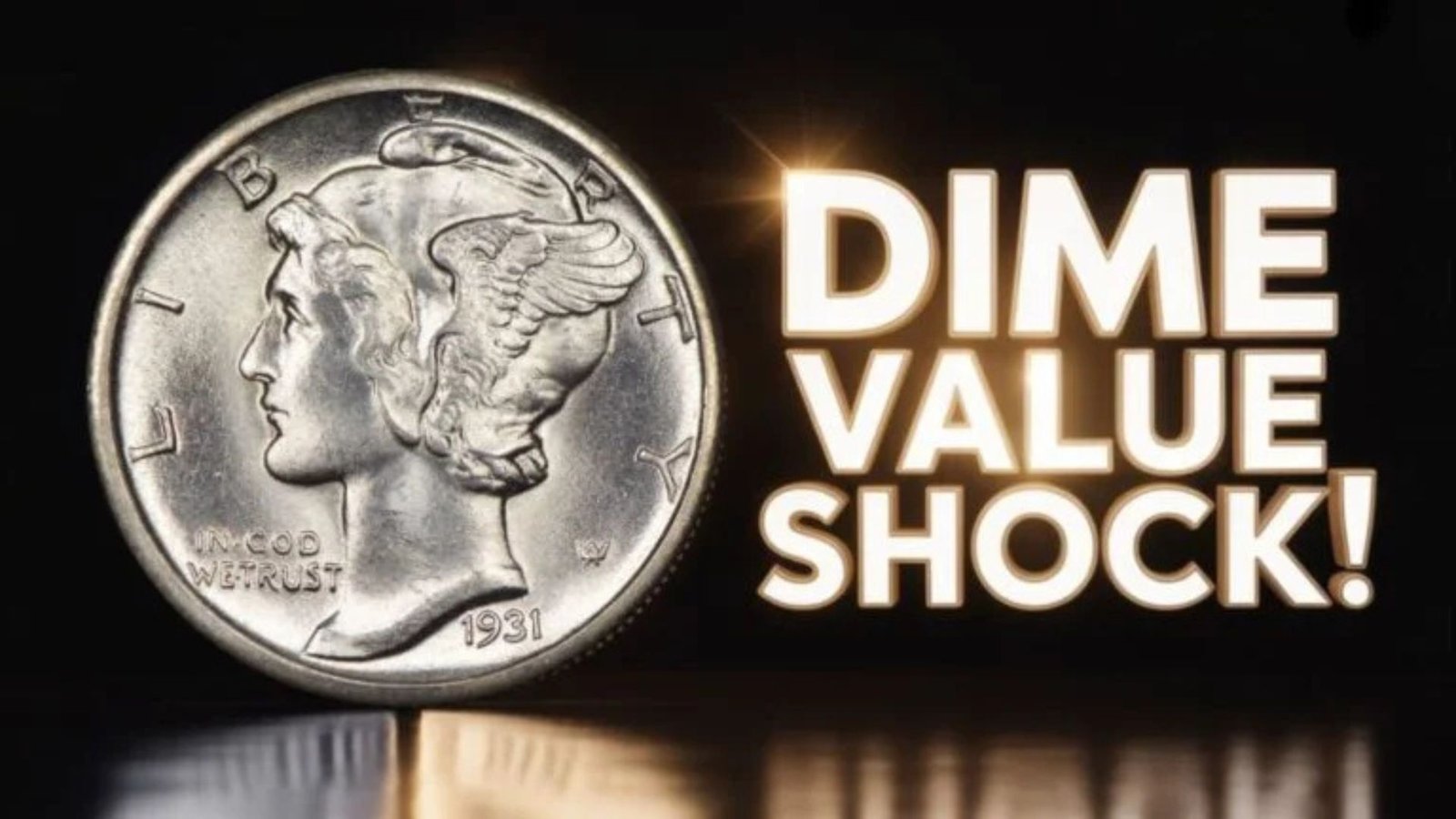
Picture this: It’s 1916, and the U.S. Mint rolls out a new dime design featuring Lady Liberty with a winged cap that looks like the Roman god Mercury. Hence the name—Mercury dimes. Most circulated like normal cash, but a handful stand out for their rarity.
Take the 1916-D Mercury dime. Only about 264,000 were made in Denver, and many got lost or worn down. Today, one in top shape can fetch up to $1.5 million at auction. Why? Super low numbers and that crisp “full bands” detail on the fasces (a bundle of sticks symbolizing strength) on the back.
Or check the 1942/1 overdate dime—where the “2” was stamped over a “1” by accident. These error coins are like a factory blooper reel, and they sell for $50,000 or more. Simple tip: Grab a magnifying glass and look for doubled numbers or fuzzy edges.
Roosevelt Dimes: Everyday Coins with Million-Dollar Twists
Fast-forward to 1946, when President Franklin D. Roosevelt’s face graced the dime to honor his fight against polio. Billions were minted, but rare dimes hide among them thanks to minting goofs.
The 1949-S Roosevelt dime? Just 13 million made in San Francisco, and in mint condition, it goes for $20,000. But the real thrillers are the silver-proof versions from 1950-1964. These 90% silver beauties shine like new if uncirculated, pulling in $100 to $500 easy.
Don’t sleep on error dimes either—like the 1982 no-P dime (missing the Philadelphia mint mark). A few dozen exist, and they’ve sold for $500,000. Moral of the story: Inspect every dime from the 1940s-1980s. Feel for heavy silver weight (they’re denser than modern clad ones) and scan for off-center strikes.
Bicentennial Quarters: 1976’s Patriotic Payday That’s Still Paying Off
Ah, the Bicentennial quarters—those shiny 1976 coins celebrating America’s 200th birthday. With drums, a torch, and “1776-1976” stamped on, they flooded pockets during the big party. Billions exist, but a tiny fraction are rare enough to scream “jackpot!”
Standard Bicentennial Beauties: From Pennies to Paychecks
Most Bicentennial quarters are copper-nickel sandwiches worth face value (25 cents). But grab one from the 40% silver proof sets sold at mints back then. These special editions, with their mirror-like shine, can hit $10-50 today if pristine. Hunt in old coin rolls from grandma’s drawer—silver ones ring differently when you tap them.
Error Coins That Minted Millionaires Overnight
Here’s where the fun ramps up: Mint mistakes turned ordinary quarters into rarities. The 1976-S silver Bicentennial quarter with a double-struck eagle? That means two images overlapped, creating a ghostly double. One sold for $25,000 in 2023.
Off-center strikes are another winner—imagine George Washington’s face shifted 50% off-kilter. These fetch $1,000 to $10,000 based on the wonkiness. And don’t miss the “missing clad layer” errors, where the copper core shows through, looking like a bronze medal. Auction records? Up to $5,000.
Pro tip: Use your phone’s flashlight to spot these. Hold the coin at an angle—errors pop like neon signs.
How to Spot Rare Dimes and Bicentennial Quarters in Your Stash – Step-by-Step Guide
Ready to play detective? No need for expensive gear; your kitchen table works fine. Follow these easy steps to uncover valuable coins lurking in your change.
Tools You’ll Need (All Under $20)
- Magnifying glass or loupe (for close-ups).
- Coin scale (to weigh silver vs. clad).
- Soft cloth (to clean without scratching).
- Free apps like PCGS CoinFacts for quick ID.
Quick Checklist: Does Your Coin Qualify as Rare?
- Date Check: Focus on 1916-1945 for dimes, 1976 for quarters.
- Mint Marks: Look for D (Denver), S (San Francisco), or none (Philadelphia) under the date.
- Condition Hunt: Shiny, no scratches? That’s “uncirculated” gold.
- Error Spotting: Doubles, offs, or missing bits? Snap photos and search online.
- Weigh It: Silver dimes = 2.5 grams; quarters = 6.25 grams.
If it passes, head to a local coin shop or eBay for a free appraisal. Remember, condition is king—worn coins lose value fast.
Top Rare Dimes and Bicentennial Quarters Worth a Fortune
To make it super easy, here’s a handy table of standout coins. Values are estimates for top-condition pieces (based on recent auctions from PCGS and Heritage). These aren’t guarantees—get yours graded for the real scoop.
| Coin Type | Year/Mint Mark | Key Feature | Estimated Value Range | Why It’s Rare |
|---|---|---|---|---|
| Mercury Dime | 1916-D | Full Bands Detail | $10,000 – $1.5M | Low mintage (264K total) |
| Mercury Dime | 1942/1 | Overdate Error | $5,000 – $100K | Minting mistake on wartime coin |
| Roosevelt Dime | 1949-S | Low Mintage | $500 – $20K | Scarce San Francisco run |
| Roosevelt Dime | 1982 (No P) | Missing Mint Mark | $100K – $500K | Ultra-rare error (dozens exist) |
| Bicentennial Quarter | 1976-S Silver | Proof Condition | $5 – $50 | Limited silver sets sold |
| Bicentennial Quarter | 1976 | Double-Struck Error | $1,000 – $25K | Factory overlap mishap |
| Bicentennial Quarter | 1976 | 50% Off-Center Strike | $2,000 – $10K | Major alignment fail |
| Bicentennial Quarter | 1976 | Missing Clad Layer | $500 – $5K | Exposed copper core |
Note: Values fluctuate with market trends. Always verify with experts.
Real Stories: Everyday Folks Who Struck It Rich with These Coins
Nothing beats a good underdog tale. Take Sarah from Ohio—she found a 1916-D Mercury dime in her late dad’s poker winnings. After a quick Google, she auctioned it for $85,000, buying her dream home down payment.
Or Mike in Texas, who sifted through 1976 Bicentennial quarters from a yard sale lot. One off-center beauty netted $3,200—enough for a family vacation. These aren’t fairy tales; they’re happening now. In 2024 alone, over 500 rare dimes changed hands at auctions, totaling $120 million. Add Bicentennial quarters errors, and you’re nearing that $350 million pie.
Common Mistakes to Dodge When Hunting Valuable Coins
Excitement can trip you up, so here’s the straight talk:
- Don’t Clean Aggressively: Soap and water only—polishing kills value.
- Skip the Guesswork: Use certified graders like NGC or PCGS for official tags.
- Beware Fakes: Crooks plate cheap coins in silver. Test with a magnet (real silver sticks a bit).
- Store Smart: Keep in albums, away from air and fingers—oils age ’em fast.
Where to Sell Your Finds: From Local to Global
Scored big? Congrats! Start local: Coin shows or shops offer quick cash (70-80% of value). For max bucks, go online—eBay for starters, Heritage Auctions for pros. Expect fees, but top sales hit 100% or more.
Pro collectors tip: Join forums like CoinTalk for advice. And if you’re hooked, start a collection—it’s cheaper than therapy and way more rewarding.
Final Call: Your Coin Hunt Starts Now – Don’t Miss Out on Millions
There you have it: Rare dimes and Bicentennial quarters aren’t myths—they’re in attics, jars, and junk drawers nationwide, adding up to $350 million in untapped wealth. We’ve simplified the hunt, from history bites to error-spotting hacks, all in plain English.
Grab that change pile today. Who knows? Your next flip could fund retirement or that bucket-list trip. Share your finds in the comments—what’s the oldest coin you’ve got? Happy hunting, and may Lady Luck (or Mercury) smile on you.