

Ever wondered if that worn quarter from 1970 in your change jar could be hiding a secret worth thousands? The 1970 Washington quarter looks like any other 25-cent piece, with George Washington’s face on the front and an eagle on the back. But one rare version, created by a wild factory mistake, has sold for as much as $35,000 at auction.
This happened during a busy time in U.S. history, with protests over the Vietnam War and cultural shifts like Woodstock. In 2025, with more people exploring coin collecting, called numismatics (the fun hobby of gathering and learning about old money), these quarters are getting fresh attention. Most are worth just 25 cents, but errors like the famous mule – a mix-up where a 1970-S proof was stamped over a 1941 Canadian silver quarter – turn ordinary coins into treasures.
What Is the 1970 Washington Quarter?

The 1970 quarter is part of the Washington series, named after the first president on the front. It’s a copper-nickel clad coin, meaning layers of different metals sandwiched together to save costs. The front shows Washington’s profile facing left, with “IN GOD WE TRUST,” “LIBERTY,” and the date. The back features a heraldic eagle with arrows and olive branches, symbolizing strength and peace.
The History Behind the 1970 Quarter
1970 was a time of change – think peace protests, moon landings, and social movements. The Mint was busy switching from silver to clad after 1965 shortages. They cranked out quarters to meet demand, but in the rush, mistakes happened. San Francisco’s proofs were for special sets, but one got stamped over an old 1941 Canadian silver quarter – a big goof where the front and back didn’t match. This mule error, called a hybrid because it’s part U.S. and part Canadian, is one of the rarest modern coins, with fewer than 10 known. It shows how human errors in factories can create treasures.
Why the 1970 Quarter Became a Numismatic Rockstar
The 1970 quarter’s rise to fame is all about rarity and surprise. Common ones are just 25 cents in worn shape, but uncirculated or errored versions jump to $5-$20 or more. The mule error? That’s the superstar – one sold for $35,000 because it’s unique, blending U.S. proof shine with Canadian silver. Rarity comes from low numbers: Only one mule is known, and even proofs from San Francisco are scarcer than regular strikes.
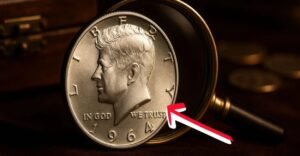
Condition matters too – experts grade on a 1-70 scale, where MS65+ (near-perfect) multiplies value. Emotional ties to the 1970s – a decade of change – add appeal. In 2025, with silver at $30 an ounce and apps making spotting easy, these quarters are hot for beginners. They’re proof that modern coins can pack a punch without being ancient.
Hunt for Your Own Rare 1970 Quarters: Easy Steps
Ready to join the fun? No need for fancy tools – just curiosity and a good light.
Simple Ways to Find and Check Them
- Get Rolls: Ask your bank for quarter tubes ($10 for $10 in coins) – sort at home for dates and marks.
- Eye the Edges: Smooth for proofs; look for odd weights or foreign details on mules.
- Spot Errors: Magnifier for doubles (blurry letters), off-centers (shifted designs), or funky edges.
- Weigh It: Regular clad is 5.67 grams; silver errors feel heavier at 6.25 grams.
- Grade It: Send suspects to PCGS or NGC for official scores – it boosts sell price.
Start with no-mint-mark Philadelphia ones – they’re affordable at $5-$20 uncirculated.
Mind-Blowing Facts and Auction Highs
Did you know over 500 million 1970-S proofs were made, but the mule is one-of-one? Here’s a quick value breakdown for 2025 (circulated to MS65+ condition):
| Mint Mark | Circulated Value | Uncirculated (MS65+) | Top Auction Record | Notes |
|---|---|---|---|---|
| No Mint Mark (Philly) | $0.25 | $5–$20 | $500 (error) | Common starter |
| D (Denver) | $0.25 | $4–$15 | $1,000+ (rare error) | High mintage, but MS68+ ultra-rare |
| S (Proof) | N/A | $7–$14 | $35,000 (mule overstrike) | Mirror shine; mule hybrid with Canadian silver |
And check these stats: Only one 1970-D is graded MS68+, scarcer than many old coins.
| Fun Fact | Detail |
|---|---|
| Total Mintage | 1.193 billion+ across mints |
| Error Rarity | Fewer than 10 known mules |
| Decade Standout | Tops modern quarters in buzz |
Pro Tips from Coin Experts
Listen up: Don’t clean your quarters – it tanks shine and value. Store in albums away from air. Get ’em graded by PCGS or NGC for trust. Hunt estate sales for undervalued 1970 pieces. And remember: Patience pays. That “junk” jar might hide a numismatic jackpot.
Quick Hunting Hacks
- Sort weekly from banks.
- Use apps like CoinSnap for fast IDs.
- Join clubs for trades and tips.
FAQ
How much is a regular 1970 quarter worth?
Just 25 cents if worn, up to $20 if uncirculated.
What’s the rarest 1970 quarter error?
The S proof mule overstruck on a 1941 Canadian quarter – one known, worth $35,000.
Where to sell rare coins?
Heritage Auctions for highs, local dealers for quick cash.
Are all 1970 quarters silver?
No – clad only, except the mule with silver bits.
Can I find one in change?
Slim odds, but yes – check rolls and jars.
Conclusion
The 1970 quarter’s leap from spare change to $35,000 royalty, thanks to that epic mule error, proves history hides in everyday money. From 1970’s turbulent times to easy hunts in rolls, it’s a reminder that surprises await. Key takeaway? Scan your stash – you might hold the next big score. Share this with a coin-curious friend, dig in, or explore more Washington quarters. What’s your rarest find? Drop it below!